Hazardous Tree Removal in Tampa Bay | Joel's Pro Tree Service
Hazardous Tree Removal: Signs of Danger and What to Do
Trees add shade, beauty and value to Florida homes. But a tree that is dead, damaged or unstable can become a real danger. In Tampa Bay, strong storms and hurricanes make hazardous trees even more risky. When a tree poses a threat to people or property, removal is often the safest choice. This guide from Joel’s Pro Tree Service explains the warning signs, when trimming is not enough and what hazardous tree removal involves.
Schedule Your Tree Service at 866-434-8733
Key Takeaways
Hazardous tree removal is usually the safer call once rot reaches the trunk, and if the tree leans toward a power line, leave the hazardous tree removal to trained crews.
A hazardous tree has a defect and a nearby target.
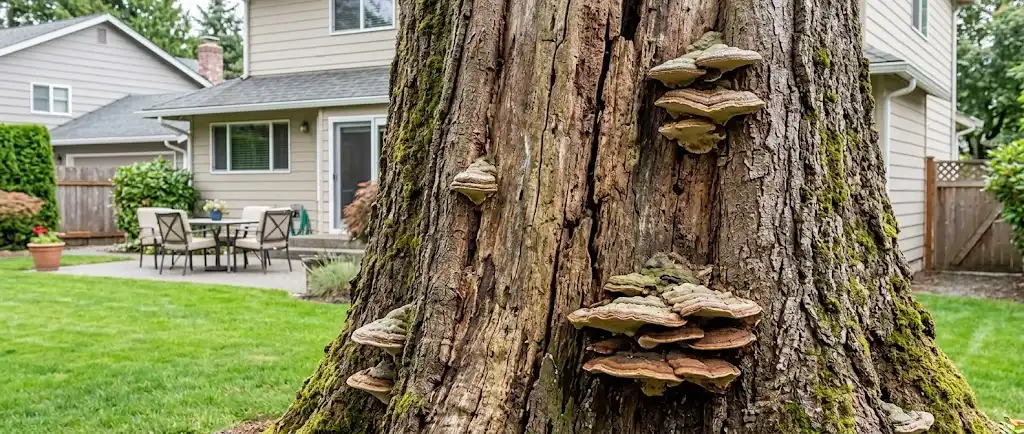
Mushrooms at the base can signal decay.
Trimming cannot fix a rotted trunk.
Only qualified workers should work near power lines.
Florida law allows removal of documented dangerous trees on residential property without a local permit in many cases.
What Makes a Tree Hazardous?
A hazardous tree has a defect that could cause it or part of it to fail, and it is close to something it could damage. That target might be your home, a car, a driveway, a fence, a power line or a place where people gather. A dead tree in an empty field may pose little risk. The same tree next to a bedroom is a serious concern.
Warning Signs to Watch For
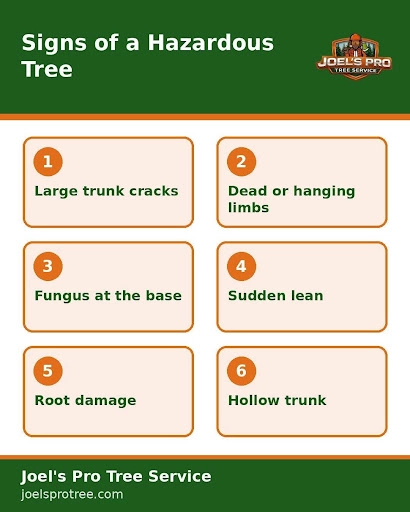
Cracks and Splits
Deep cracks in the trunk or large limbs can mean the wood is weak. Splits where two main stems meet are especially risky.
Dead or Hanging Branches
Dead limbs can fall without warning. Broken branches stuck in the canopy, sometimes called hangers, are also dangerous.
Decay and Fungus
Mushrooms or conks at the base of a tree can signal root or trunk decay. Soft, crumbly wood and hollow areas are other signs.
A New or Sudden Lean
Some trees grow with a natural lean. A tree that starts leaning suddenly, especially after a storm, may have root damage.
Root Problems
Lifting soil, cut roots from construction or exposed roots near the trunk can weaken a tree's hold on the ground.
Trimming vs. Removal
Sometimes a tree can be made safer with pruning. Removing dead limbs or reducing weight can help. But trimming will not fix a rotted trunk, a failing root system or a deep split. When the main structure of a tree is compromised, removal is usually the safer answer. A certified arborist can help you decide.
Schedule Your Tree Service at 866-434-8733
How Pros Remove Hazardous Trees
Hazardous trees can be unpredictable. They may not fall the way a healthy tree would. Professional crews use careful planning and the right gear, which may include:
Rigging ropes to lower limbs in a controlled way
Bucket trucks for safe access
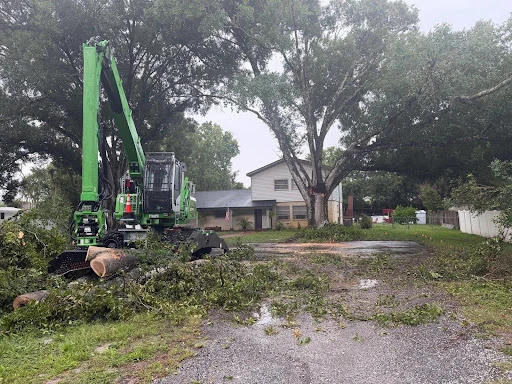
Cranes for trees near homes or in tight spaces
Grapple equipment to move heavy wood
The crew will assess the tree, plan the work and protect nearby structures.
Schedule Your Tree Service at 866-434-8733
Trees Near Homes and Power Lines
Trees close to a house need special care. A falling limb can damage roofs, gutters and windows. Trees near power lines are even more dangerous. Only qualified line-clearance workers should work near energized lines. Contact your utility company if a tree is touching or close to a power line.
Permits and Hazardous Trees
Some cities and counties in Tampa Bay require permits to remove certain trees. Florida law has a special rule for residential property. If a certified arborist or a licensed landscape architect documents that a tree poses a danger to people or property, a local government generally cannot require a permit to remove it. Rules can change, so check before you start.
Why Removal Is Often Better Than Trimming
Homeowners often hope that a few cuts will make a risky tree safe again, and in some cases selective pruning can help. But when a tree has a decayed trunk, a failing root system or a large split between main stems, trimming only removes weight from a structure that is already compromised. Removing the tree eliminates the risk entirely, protects your home and family during storm season and gives you a chance to plant a better-suited tree in a safer location.
Why DIY Removal Is Risky
Cutting a damaged tree is one of the most dangerous outdoor jobs. Branches can snap back. Trunks can split. Trees can fall the wrong way. For anything beyond small limbs, it is safest to hire a licensed and insured tree service.
Safety Tips for Homeowners
Trees can be dangerous. Keep these tips in mind.
Stay away from fallen power lines.
Assume every downed line is live.
Do not climb a damaged tree.
Do not use a chainsaw on a tree under tension.
Keep kids and pets away from hanging limbs.
Take photos before any cleanup.
Call a pro for large trees.
Ask for proof of insurance.
When to Call a Tree Pro
Call for help if you see any of these signs:
Large cracks in the trunk
Mushrooms at the base
A sudden new lean
Lifting soil near the roots
Dead limbs over the roof
Branches touching power lines
Early action can prevent a bigger problem later.
In Short
A hazardous tree has a defect and a nearby target. Watch for cracks, decay, dead limbs and sudden leans. When the structure is compromised, removal is often the safest choice.
How Joel's Pro Tree Service Can Help
Joel's Pro Tree Service is a locally owned tree company in Odessa, Florida, serving the greater Tampa Bay area. The licensed and insured team offers tree removal, tree and shrub trimming, emergency tree service, stump grinding, land clearing and plant health care, with same-day emergency response and free, no-obligation estimates. Contact us today at 866-434-TREE, text 866-434-8733 or visit Joel's Pro Tree Service.
Frequently Asked Questions
Q: How do I know if my tree is hazardous?
A: Look for cracks, decay, dead limbs and leaning. A certified arborist can give a full assessment.
Q: Can I trim a hazardous tree instead of removing it?
A: Sometimes, if the problem is limited to certain limbs. Structural problems usually require removal.
Q: Does Joel's Pro Tree Service remove hazardous trees?
A: Yes. Joel's Pro Tree Service provides tree removal and emergency tree service across Tampa Bay.
Services We Offer
