7 Ways to Prepare Your Property for Tree Crew | Joel’s Pro Tree
7 Ways to Prepare Your Property for the Tree Crew
Proper professional tree removal requires more than firing up a chainsaw and letting gravity do the work. At Joel’s Pro Tree Service, dropping a seventy-foot pine takes solid ground strategy. You need clear drop zones. Heavy machinery must get in without chewing up your lawn. Crews have to work without ripping down overhead power lines.
A storm-wrecked oak leaning over your roofline needs space to come down safely. A little ground prep goes a long way. Every job site presents tight quarters. Structural hazards exist everywhere. Working closely with your arborists ensures the job finishes safely and efficiently.
Key Takeaways
Clear vehicles, utility trailers, and yard gear out of the primary drop zone.
Unblock side gates to let heavy chip trucks and aerial lifts maneuver easily.
Keep children and pets far away from active rigging lines and running chippers.
Point out hidden hazards like shallow irrigation lines or buried septic tanks upfront.
Verify the exact contract scope regarding stump grinding depth and log hauling.
Flag any overhead service drops with the crew chief before outriggers deploy.
Follow the crew’s site-specific directions rather than attempting high-rigging yourself.
How Should You Prepare Your Property for a Tree Service?
Getting your yard ready means clearing a runway. It means locking down potential hazards. Let the arborists handle the heavy steel and high-voltage risks. You do not need to grab a handsaw. Never attempt to drop low limbs yourself before the crew rolls up. Focus on hauling away movable yard gear instead. Open up wide access paths. Give the crew leader the lowdown on your property's hidden quirks.
Here are seven practical ways to prepare:
1. Clear Vehicles and Movable Items From the Work Area
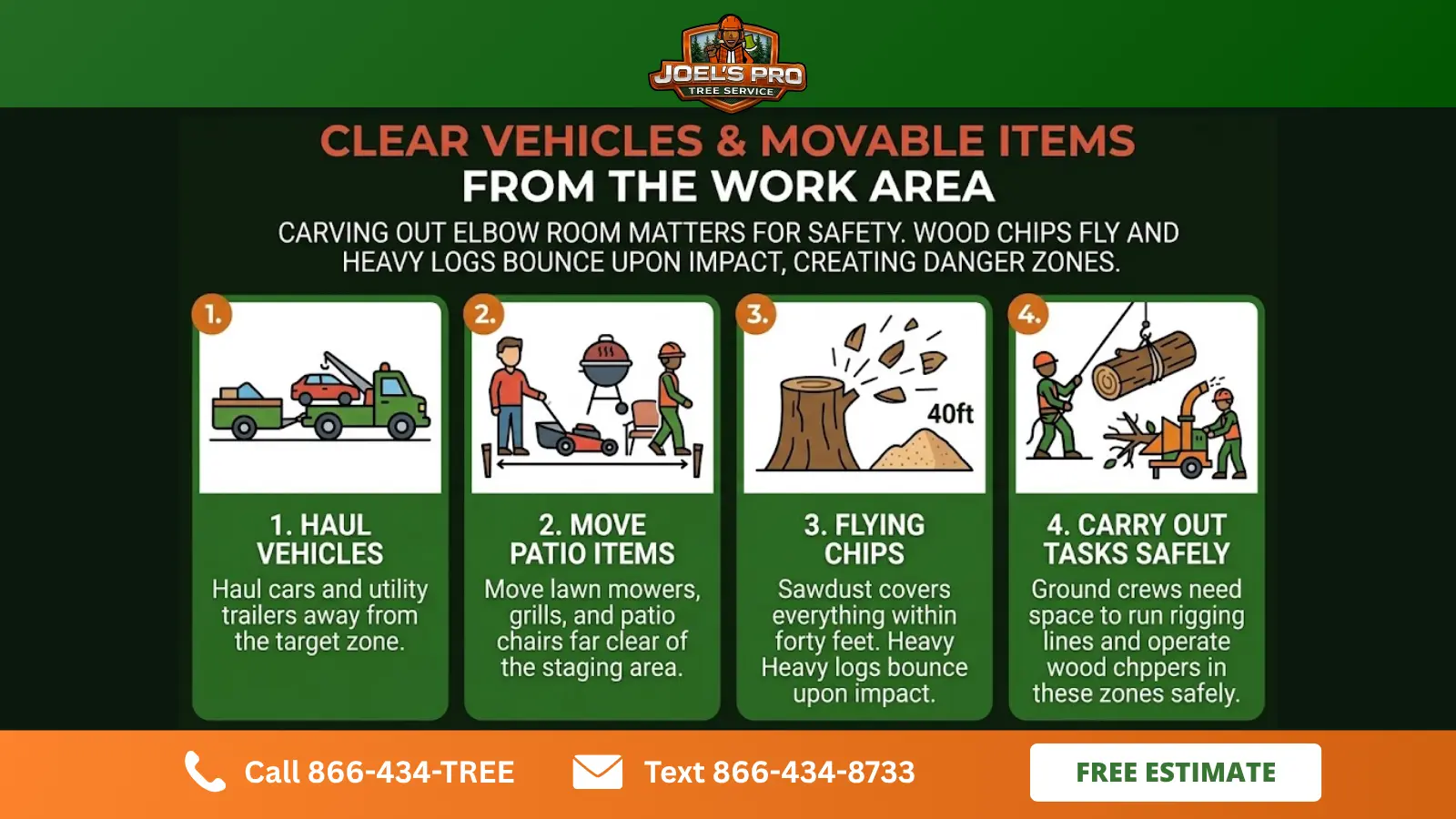
Haul cars and utility trailers away from the target zone. Move lawn mowers, grills, and patio chairs far clear of the staging area. Sawyers use precision lowering blocks. Friction brakes control the descent. However, wood chips still fly. Heavy logs bounce upon impact. Sawdust covers everything within forty feet.
Carving out plenty of elbow room matters. Ground crews need space to run rigging lines. They must stage heavy logs. They operate wood chippers in these zones safely. Give your tree service a quick shout if you feel unsure about the required clearance radius.
Schedule Your Tree Service at 866-434-8733
2. Provide a Clear Route for Heavy Equipment
Taking down a mature oak requires serious iron. Bucket trucks and mechanical loaders need access. Heavy-duty chip trailers take up space. Motorized stump grinders demand wide paths.
Unlock wide side gates early. Park street vehicles elsewhere. Equipment operators need to back straight down driveways. Alert the crew leader about hidden septic lids. Point out shallow sprinkler valves. Note soft Florida sand pockets before tires touch your grass.
Do not assume a 15-ton bucket truck can just roll across any lawn. Skilled operators evaluate soil compaction first. They lay down heavy plywood or ground protection mats where needed.
3. Keep Children and Pets Away From the Work Zone
An active tree job operates like a high-hazard construction site. It is not a spectator sport. Screaming two-stroke engines create chaos. Rigging ropes swing under heavy loads. Flying debris presents a constant threat. Danger points shift continuously.
Keep dogs locked inside the house. Board them for the day if possible. Make sure children stay well behind closed windows. Pay close attention to crew directions all day. The hard-hat drop zone changes when the team transitions from canopy trimming to trunk sectioning.
4. Identify Nearby Structures and Property Features
Walk the yard with the foreman before anyone fires up a saw. Point out features hiding under thick grass. Show them exact locations for sprinkler heads. Mark drain lines and landscape lighting wires. Highlight invisible dog fences and pool pumps.
Experienced arborists spot big obstacles fast. Still, nobody knows the hidden quirks of your yard better than you.
Sharing these details upfront saves headaches. The ground team can lay down protective rubber mats. They might set up redirect pulleys. They can adjust their rigging strategy based on your input. Tell them which prized shrubs need protection during the drop.
5. Discuss Utility Concerns Before the Saws Start
Canopy branches intertwined with power lines demand specialized handling. Underground gas and water lines cause major disasters if hit. Heavy outriggers press deep into the dirt. Stump grinders destroy buried cables instantly.
Communicate all known service line routes early. Never touch limbs lying within ten feet of energized wires.
Confirm who will call 811 to locate underground utilities. Get lines marked before the crew sets up. Finding utility easements matters heavily before grinding deep root balls.
6. Confirm Cleanup and Stump Grinding Details
Not every quote includes total site restoration. Log hauling might cost extra. Stump grinding is often a separate line item. Review your written scope of work carefully. Nobody wants a massive pile of wood chips left behind unexpectedly.
Questions worth confirming include:
Will all brush and heavy timber be hauled away?
Is high-capacity wood chipping included in the quote?
Does the price cover full stump grinding below grade level?
Will the crew haul off the raw stump grindings?
Can the team slice trunk sections into firewood logs upon request?
Will workers rake the turf and blow off driveways?
Clearing up these details prevents post-job arguments. Set realistic expectations for how your yard will look when the trucks leave.
7. Follow the Tree Crew's Site-Specific Instructions
No two takedowns run identically. Dropping a dead palm in an open yard takes a simple setup. Rigging a rotten water oak out of a cramped backyard requires intense planning. Screen enclosures and vinyl fencing complicate everything.
Your team might ask you to move extra items. They could ask you to park down the street. Unlock extra access points if requested. Stay clear of specific side yards during crane maneuvers.
Listen to their directions completely. Leave all the cutting and notch-sinking to trained professionals. Never attempt to "help out" by pre-trimming low limbs yourself.
Proper setup keeps the job moving fast. Open dialogue keeps your home, lawn, and family safe.
Why Is Property Access Important for Heavy Tree Work?
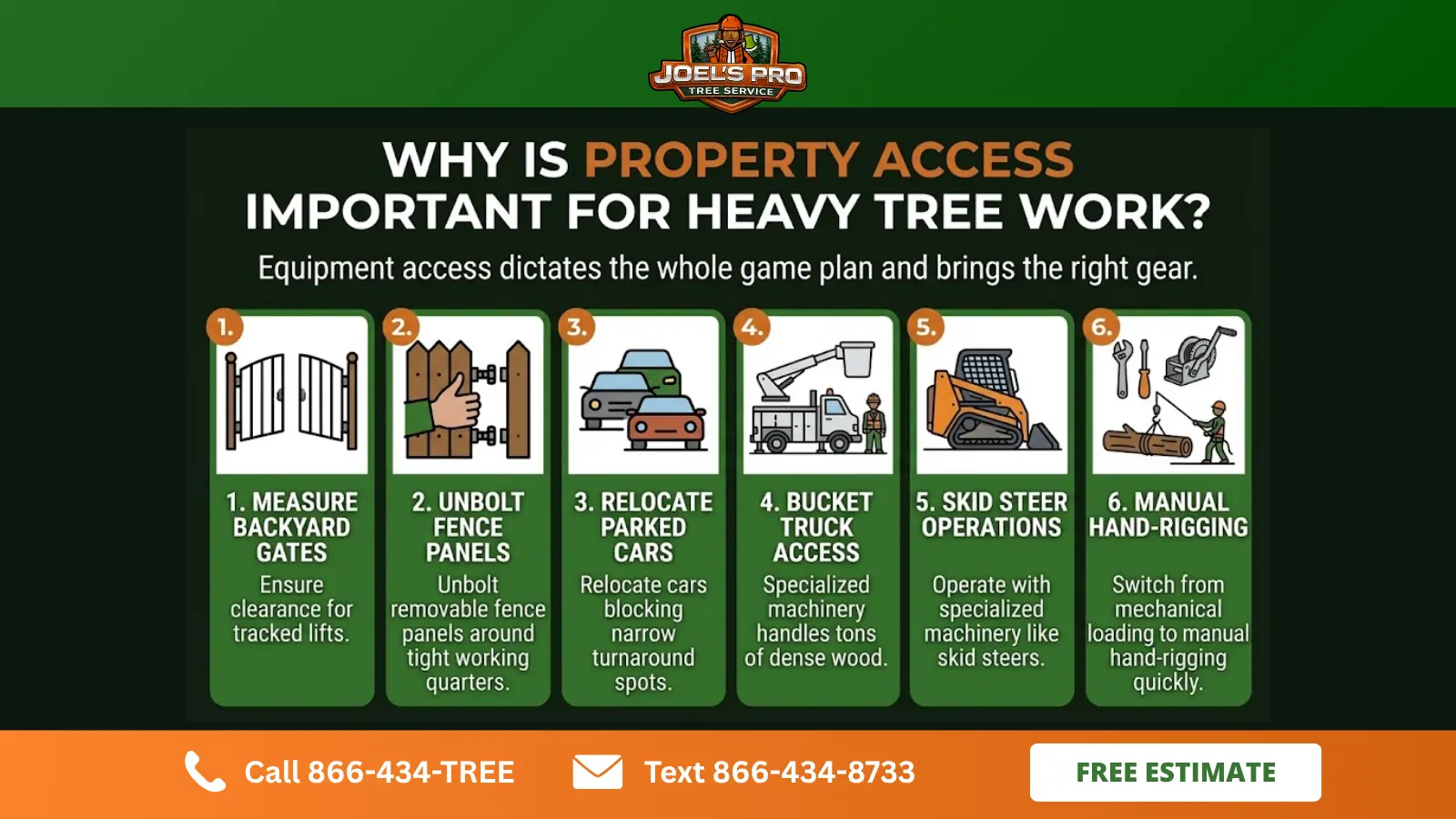
Equipment access dictates the whole game plan. Getting ready for professional tree removal means planning for heavy logistics. Arborists rely on specialized machinery like skid steers. Bucket trucks and high-volume chippers handle tons of dense wood. Tight space forces the crew to switch tactics. Mechanical loading turns into manual hand-rigging quickly.
Several property conditions can affect access:
Measure backyard gates to ensure clearance for tracked lifts.
Unbolt removable fence panels around tight working quarters.
Relocate parked cars blocking narrow turnaround spots.
Protect in-ground pools and concrete decks from rig paths.
Clear paths around storage sheds and detached garages.
Flag dense ornamental garden beds immediately.
Identify steep slopes or muddy swales holding water.
Check tight residential driveways for low roof overhangs.
Contractors check these access bottlenecks during the site visit. This lets them bring the right gear on day one.
Equipment that reaches a canopy from a driveway cannot always squeeze into a narrow backyard. Sometimes crews piece out branches individually. They lower them inch by inch with friction brakes. Open space beneath the canopy determines the method.
Leave permanent structures intact. Do not chop down shrubs unless the crew leader specifically asks for an access path. Commercial crews navigate tight spaces using ground protection mats and compact loaders.
Schedule Your Tree Service at 866-434-8733
What Should You Move Before a Tree Crew Arrives?
Haul anything portable out of the work radius. Clearing the area protects your personal property. Stray sawdust and falling twigs cause minor damage. Heavy bark and foot traffic cause more.
Consider relocating:
Drive cars, trucks, and motorcycles to street parking.
Tow boats, RVs, and utility trailers away.
Move patio tables and umbrella stands indoors.
Roll barbecue grills and propane tanks far away.
Shift potted plants and hanging baskets into the garage.
Clear kid toys and play structures out of the yard.
Stash bicycles and lawn tools inside sheds.
Store lawn mowers out of harm's way.
Remove seasonal yard decorations entirely.
Vehicles require special attention. Operators need clear access to driveways. Chip trucks and trailers need street curb space. Moving your cars early prevents them from getting boxed in.
Safe clearance depends on tree height and lean. Removal methods and equipment size dictate the perimeter. Ask your crew chief for a safe distance if you feel unsure.
What Should You Expect on the Day of the Job?
The job chief walks the ground first. They establish safety perimeters with cones or tape. The ground team positions heavy trucks. Everyone reviews the rigging plan. Big trees leaning over structures come down section by section.
Depending on the project, the process may involve:
Establish a controlled work zone with bright cones.
Position bucket trucks or climbing gear beneath the canopy.
Prune off lower lateral limbs for a clean drop shaft.
Rig upper branches with ropes and friction blocks.
Cut heavy trunk logs into manageable segments.
Feed brush straight into the high-capacity wood chipper.
Load heavy trunk wood onto log trailers.
Grind the remaining stump and deep surface roots.
Rake loose debris and blow off hardscapes.
Stay inside or behind the safety tape while work happens. Flag down a ground crew member if you need to leave the house. They will pause cutting and guide you safely past the active zone.
Understanding this workflow helps you prepare. Expect high noise levels from chainsaws. Plan for temporary driveway blockages.
How Can You Protect Landscaping During the Drop?
Heavy tree work happens around delicate turf and flower beds. Custom hardscaping takes deliberate care. Dropping tons of timber generates heavy foot traffic. Taking extra precautions keeps your high-value plant beds intact.
Before removal day, walk around the base and note:
Flag delicate perennial beds and young shrubs.
Locate pop-up sprinkler heads accurately.
Mark low-voltage outdoor lighting fixtures.
Protect stone landscape edging and retaining walls.
Avoid running equipment on freshly laid turf.
Map French drains and PVC catch basins.
Guard arbors and decorative garden structures.
Identify soft lawn areas vulnerable to deep tire ruts.
Show these high-risk areas to the foreman immediately.
Tree size dictates practical protective measures. Safely dropping a decaying 80-foot oak means balancing landscape protection with crew safety. Discussing expectations before cutting starts prevents major property damage.
Why Should You Avoid DIY Preparation Around a Hazardous Tree?
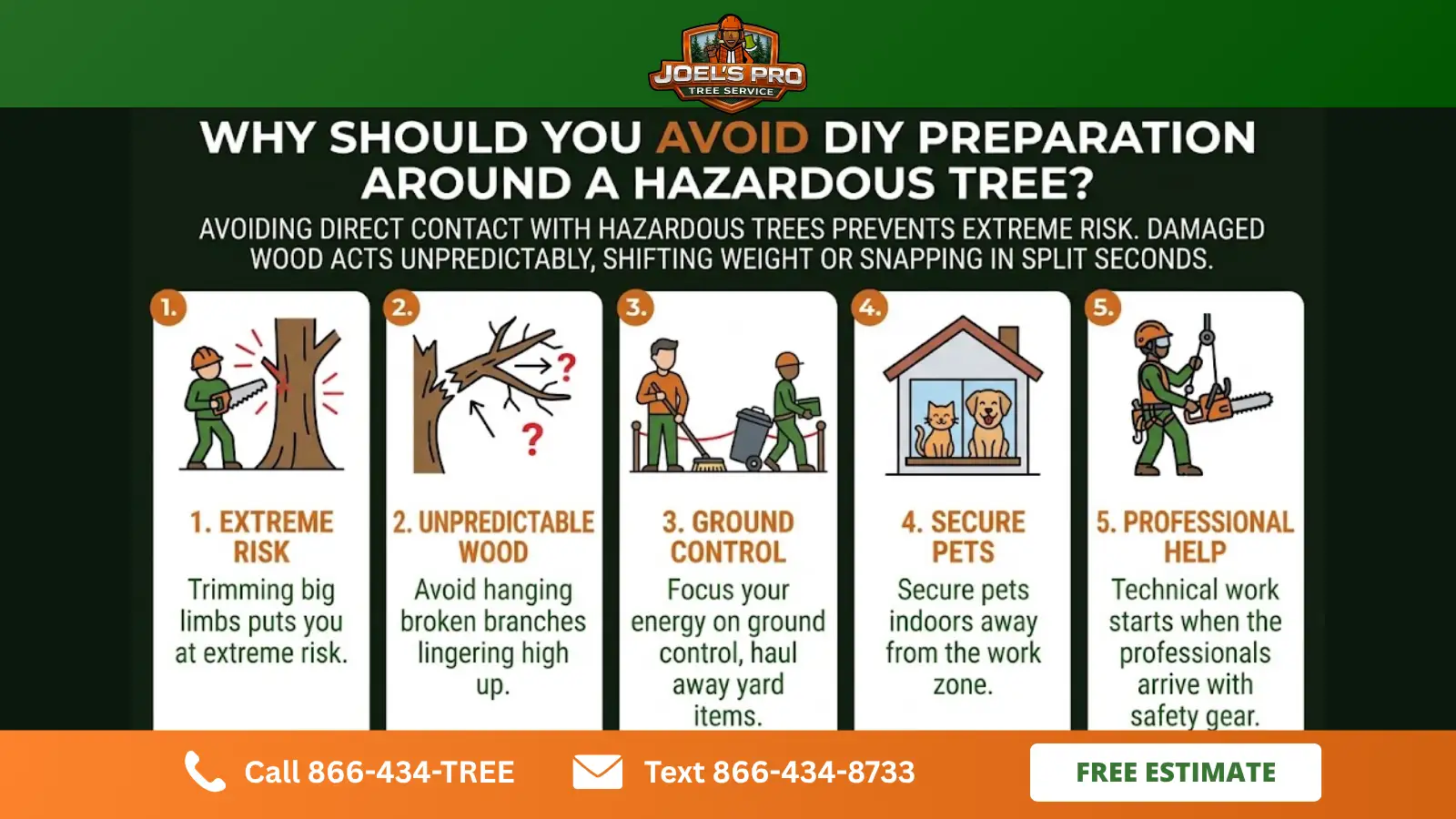
Preparing your yard means moving ground obstacles. It does not mean taking a chainsaw to the trunk. Trimming big limbs puts you at extreme risk. Climbing weak crotches leads to severe injury.
This is especially important when dealing with:
Inspect storm-damaged timber sitting under extreme tension.
Avoid hanging broken branches lingering high up.
Handle dead or structurally compromised trunks carefully.
Evaluate trunks displaying severe vertical cracks.
Secure trunks leaning heavily toward homes or power lines.
Stay clear of canopy limbs touching utility wires.
Rig large structural limbs overhanging roofs carefully.
Damaged wood acts unpredictably. Limbs snap or shift weight in split seconds. Internal forces remain hidden from the ground.
Focus your energy on ground control. Haul away yard items. Secure pets indoors. Unlock gates for the machinery. Flag hidden utilities clearly. Communicate with your arborists.
Technical work starts when the professionals arrive. They carry heavy-duty rigging gear. They wear safety harnesses. They carry specialized liability insurance.
Schedule Your Tree Service at 866-434-8733
Schedule Your Tree Project With Joel's Pro Tree Service
Taking a few simple steps prepares your property perfectly. It pays off in a smoother and safer job. It makes the work faster the moment our trucks arrive. Haul away yard gear. Clear wide equipment paths. Secure pets inside. Mark underground utilities. Confirm project details upfront. This helps our crew work at peak efficiency.
Dead, damaged, or hazardous timber requires immediate attention. Joel's Pro Tree Service handles the toughest jobs safely. We operate in Odessa, FL, and surrounding Tampa Bay communities. Our team evaluates the property closely. We explain exactly what ground prep is needed. We provide a clear scope of work before the chainsaws start. Contact us at 866-434-TREE for a free, no-obligation estimate and book your professional tree removal today.
Frequently Asked Questions
Q: Do I need to be home during the takedown?
A: You do not always need to stand in the yard all day. Walk the site with the crew leader first. Clear obstacles and unlock gates early. Confirm payment details. Ask your contractor if an adult needs to stay on-site during the cutting.
Q: Should I move my car before the service arrives?
A: Yes, getting all personal vehicles out of the driveway is standard practice. Crews need clear access for chip trucks and loaders. Parking down the street keeps your paint safe from falling sawdust.
Q: Will heavy machinery damage my lawn?
A: Dropping massive limbs leaves impression marks. Rolling heavy equipment across turf leaves tire tracks. Sandy soil holds deep ruts. Discuss ground protection options like heavy turf mats with your estimator.
Q: Does a standard takedown include stump grinding?
A: Stump grinding is often billed as a separate service. Review your written proposal closely. Confirm whether the crew cuts the trunk flush to the dirt. See if they leave a short stump or grind the root ball below grade.
Q: What happens to branches and logs after the drop?
A: Workers feed brush through high-capacity chippers. Haulers take heavy trunk logs away in trucks. You can ask the crew to leave chopped firewood behind. Clarify your debris disposal preferences before signing the contract.
