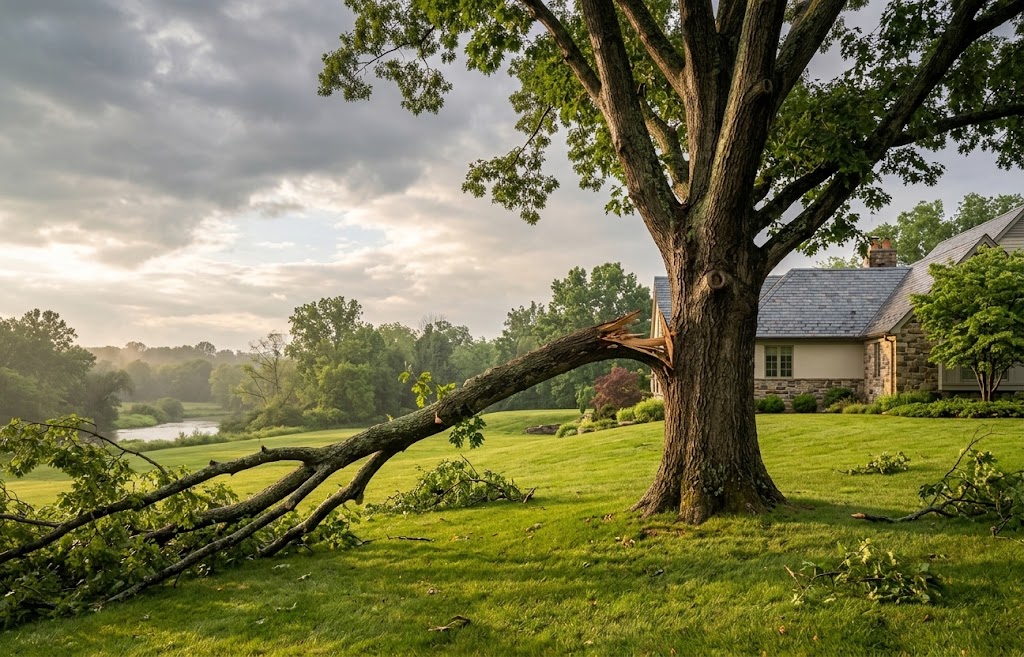
Can a Tree Service Near You Help With Storm Damage Guide
Can a Tree Service Near You Help With Storm Damage?
A tree service near you, such as Joel’s Pro Tree Service, can help with storm damage by assessing hazardous trees, removing fallen limbs, clearing blocked areas, and addressing trees that may fail after severe weather. High winds, heavy rain, and lightning can weaken trees even when the damage is not immediately obvious.
Professional assistance can help homeowners identify risks, protect structures, and determine whether damaged trees can be saved or should be removed before they create additional problems.
Key Takeaways
Inspect canopies and root zones for hidden bark seams and internal heartwood rot.
Rig hanging limbs and toppled trunks using lowering blocks and high-tonnage ropes.
Evaluate canopy loss to salvage structurally sound timber through crown restoration pruning.
Spot ground heave, bark separation, and root shearing before total failure.
Deploy heavy machinery like industrial chippers and grapple trucks for controlled removals.
Schedule rapid site evaluations after severe weather to reduce property risk.
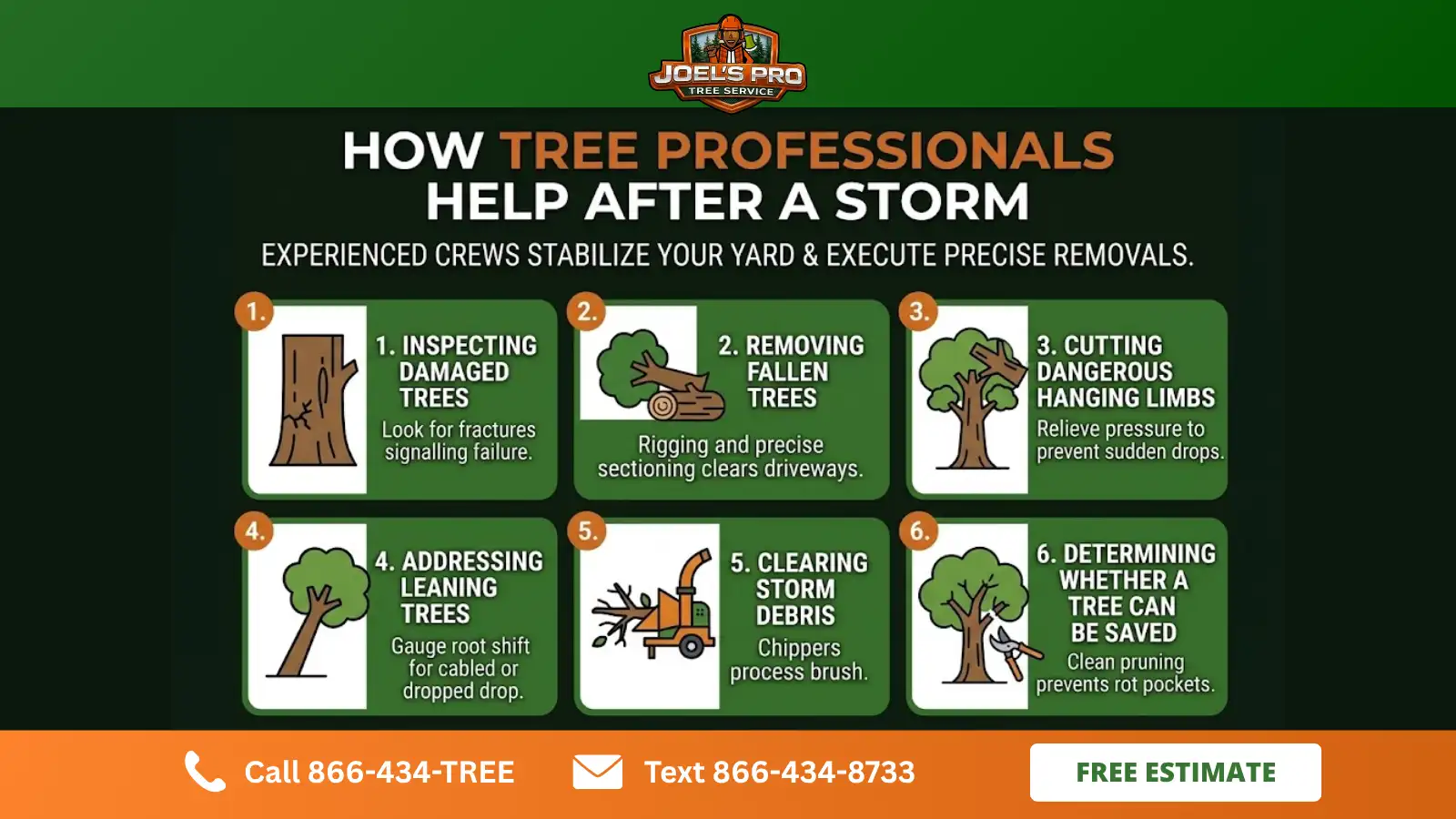
How Tree Professionals Help After a Storm
After a brutal line of severe weather rolls through, an experienced crew steps in. They stabilize your yard and execute precise removals. Storm damage varies wildly. One yard might just have a carpet of scattered pine needles. The house next door could have a multi-ton live oak split down the crotch. That massive trunk might be resting on a back deck.
Local crews handle the heavy lifting across several core emergencies:
Inspecting Damaged Trees: Trunks and primary scaffold limbs take a beating. Specialists look for hairline fractures and root shearing that signal imminent failure.
Removing Fallen Trees: Sectioning down fallen timber requires precision. Chainsaw notch-cutting and controlled rigging clear blocked driveways without chewing up lawn turf.
Cutting Dangerous Hanging Limbs: Tension-loaded "hangers" get trapped high in the canopy. Climbers relieve that pressure using pole saws and mechanical lifts to prevent sudden drops.
Addressing Leaning Trees: Root plate lifting indicates major soil tension. Experts gauge this shift to determine if an offset trunk can be cabled or must be dropped safely.
Clearing Storm Debris: Massive log sections block total property access. Heavy brush gets fed into industrial wood chippers and hauled off site.
Determining Whether a Tree Can Be Saved: Shattered limb ends need clean pruning. This prevents rot pockets and protects the remaining structural heartwood.
Having an experienced climbing team inspect the property removes the guesswork. Spotting the difference between cosmetic leaf loss and structural failure keeps your home protected.
Schedule Your Tree Service at 866-434-8733
What Types of Tree Damage Can Storms Cause?
Florida weather brings a nasty combination of threats. Heavy tropical rain and lightning strikes stress root caps. High winds hit saturated sandy soil hard. Even mature hardwoods lose their anchorage quickly in these conditions.
Crews regularly tackle severe structural failures including:
Clear-cut broken branches and jagged stub ends suspended above.
Identify severe trunk splits and bark seams along major stems.
Measure sudden leans caused by sub-surface root failure.
Expose ripped lateral systems and lifted root plates around the base.
Assess massive canopy loss where major co-dominant leaders snapped off.
Locate cracked branch unions where heavy limbs meet the main trunk.
Trace lightning scars where electrical currents boiled the sap.
Section fully uprooted timber resting across fences or power drops.
Rig heavy limbs pinned tightly against roofs and gutters.
Monitor ground heave and soil bubbling near high-load bases.
A fallen limb on your driveway demands immediate work. Slow-developing root failure is just as dangerous. Saturated dirt allows root systems to slide. That means a trunk looking upright today might slowly tip over three days later.
Watching your property over the days following a squall is critical. New bark cracks or fresh ground humps mean trouble. Branches drooping lower by the hour require immediate attention.
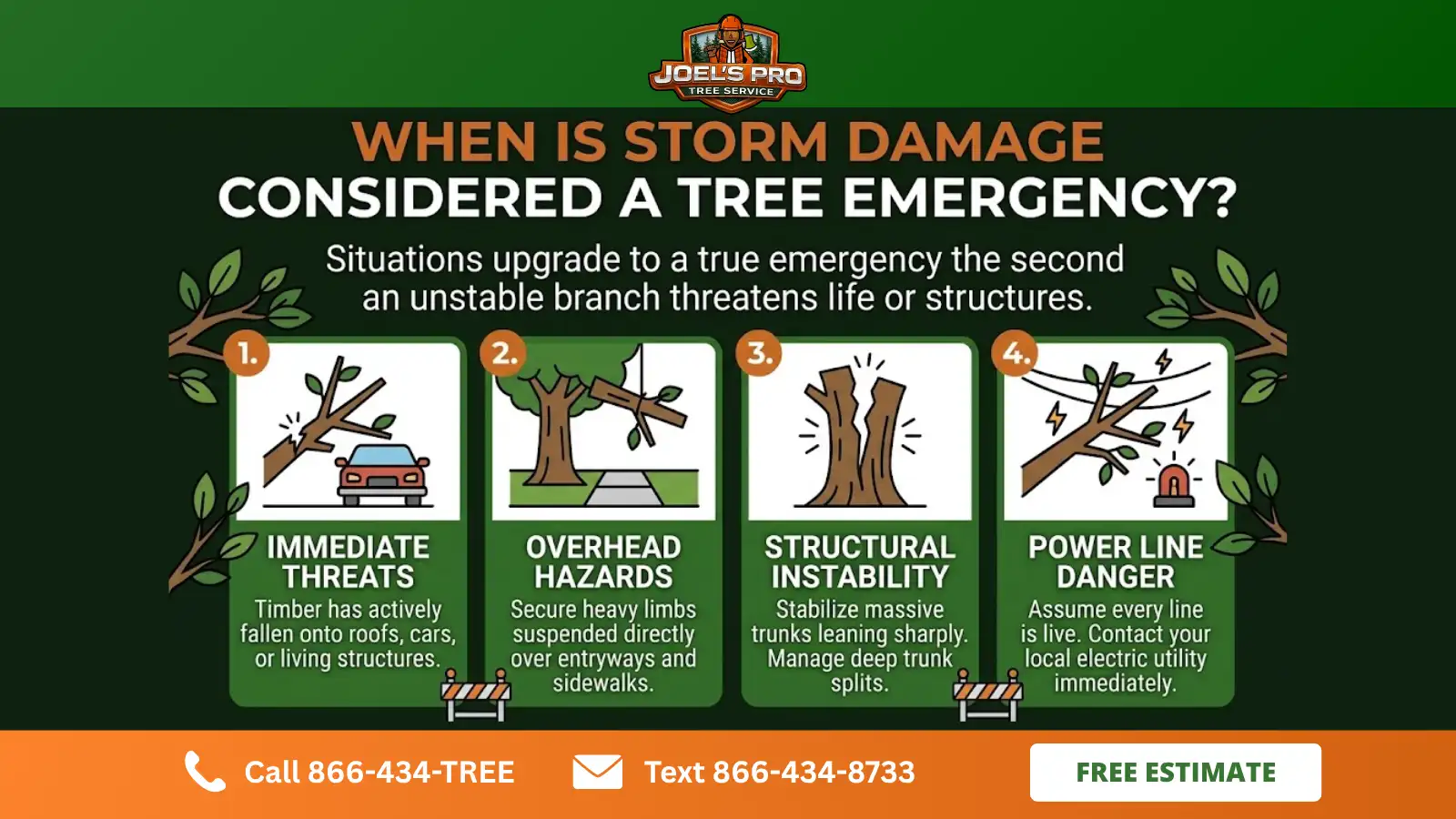
When Is Storm Damage Considered a Tree Emergency?
Situations upgrade to a true emergency the second an unstable branch threatens life or structures. Emergency work isn't about yard aesthetics. It focuses entirely on controlling tension, weight, and drop zones. Gravity will finish the destruction if you wait too long.
High-priority emergency hazards usually include:
Tackle timber actively fallen onto roofs, cars, or living structures.
Secure heavy limbs suspended directly over entryways and sidewalks.
Stabilize massive trunks leaning sharply toward neighboring properties.
Manage deep trunk splits where wood fibers actively creak under wind loads.
Clear lifted root plates pulling up concrete or lawn turf.
Unblock fallen timber completely obstructing emergency exit paths.
Remove widowmakers hanging by threads high in the canopy.
Isolate specimens that continue to shift or drop bark in calm air.
Keep all family members and pets well outside the strike zone. Finding a reliable tree service near you is essential for handling trapped storm tension. Cutting loaded wood without proper training leads to dangerous bar-pinching. Saws can snap instantly from violent kickbacks.
Any branch touching a power line demands extreme caution. Assume every line is live and energized. Contact your local electric utility immediately before letting anyone near the area.
Taking high-resolution photos from a safe distance helps immensely. This documents the structural damage for insurance adjusters while you wait for a local crew.
Schedule Your Tree Service at 866-434-8733
Can a Storm-Damaged Tree Be Saved Instead of Removed?
Yes, plenty of battered timber can be saved. The main trunk, root plate, and primary branch structure must still be sound. Complete removal always serves as the last resort. Arborists reserve that for irreversible structural damage posing a constant safety hazard.
Before slinging a saw, professionals evaluate these key factors:
Canopy Loss: Climbers calculate the percentage of foliage lost. Losing over 50% of the green canopy makes photosynthesis incredibly difficult.
Trunk Integrity: Specialists check for deep longitudinal cracks. Hollow heartwood or severe bark loss changes the game entirely.
Root System Anchoring: Primary taproots or lateral support roots sometimes snap underground.
Pre-Storm Health: Fungal rot or pest infestations weaken the wood long before the wind hits.
Target Risk: Proximity to houses and driveways matters heavily if structural integrity drops.
Species Resilience: Live oaks seal off wounds much better than soft pines.
Precise structural pruning strips away jagged, torn limbs. This balances out canopy weight. It gives a sturdy specimen the chance to callus over its wounds naturally.
Trimming off top-heavy branches won't fix shredded roots underground. A professional crew helps figure out if saving it makes long-term sense. Keeping a compromised trunk might put your property at risk during the next hurricane season.
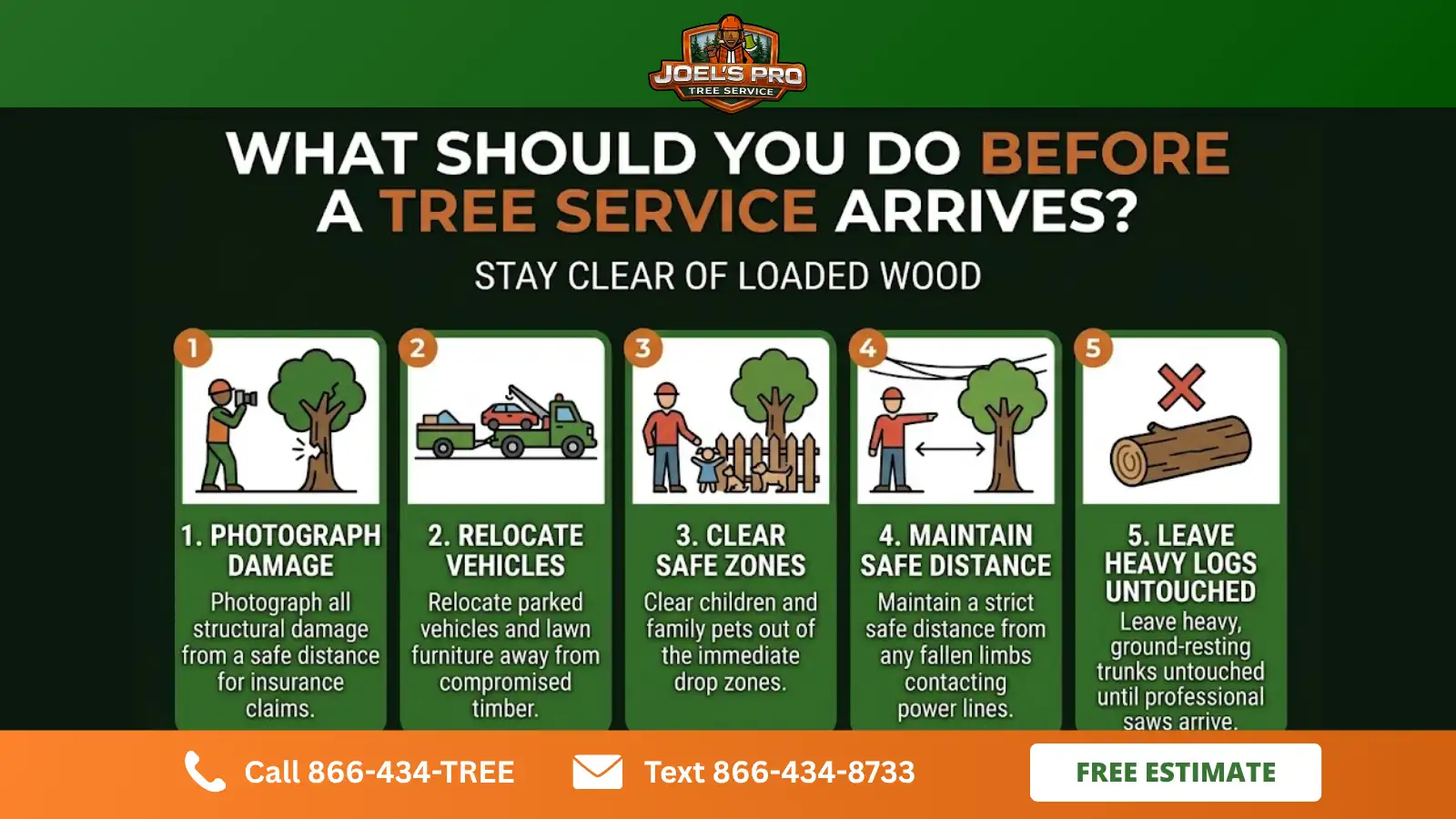
What Should You Do Before a Tree Service Arrives?
Taking basic safety measures right after the storm keeps everyone safe. An emergency crew needs time to arrive with their trucks and chippers. The primary goal involves staying clear of loaded wood. It can roll, twist, or snap unexpectedly.
Follow this practical checklist:
Clear children and family pets out of the immediate drop zones.
Avoid standing or walking directly underneath suspended limbs.
Refrain from pulling down loose branches with ropes or trucks.
Photograph all structural damage from a safe distance for insurance claims.
Relocate parked vehicles and lawn furniture away from compromised timber.
Leave heavy, ground-resting trunks untouched until professional saws arrive.
Communicate access issues or hidden septic tanks to the incoming crew foreman.
Maintain a strict safe distance from any fallen limbs contacting power lines.
Give the dispatcher a quick, clear play-by-play when calling. Let them know if wood is resting on a roof. Tell them if the street is blocked or soil is actively moving.
Asking what their line-item quote covers is smart business. Clarify whether stump grinding, debris hauling, and log sectioning are bundled together.
A crew lead can then pull up and evaluate the drop zone. They execute the job without causing additional damage to your lawn.
Schedule Your Tree Service at 866-434-8733
Get Professional Help With Storm-Damaged Trees
Storm damage leaves behind dangerous structural hazards. Split trunks, sheared taproots, and top-heavy leans sit like loaded springs. Getting your property inspected gives you a clear, no-nonsense path forward. That might mean simple corrective pruning, structural monitoring, or a full crane removal.
Joel's Pro Tree Service handles heavy removals and precision tree trimming. Crews manage emergency storm response and complete property clearing across Odessa, Land O' Lakes, Lutz, Trinity, and the greater Tampa Bay region. Trucks roll out with the right gear and heavy rigging. Years of local, hands-on experience ensure safe management of compromised timber on any property.
Severe weather leaves hazardous branches across your yard. Contact us at Joel's Pro Tree Service at 866-434-TREE for a fast, free estimate. When storm damage creates uncertainty, relying on a dependable tree service near you eliminates hazards and restores safety to your land.
Frequently Asked Questions
Q: How Soon Should I Have Storm-Damaged Trees Inspected?
A: Get damaged timber inspected immediately. Leaning trunks, exposed roots, and heavy hangers over high-traffic areas are ticking clocks. Postponing an evaluation leaves your property exposed. Wind-weakened wood can fail abruptly days after the rain stops.
Q: Should I Remove Broken Tree Branches Myself?
A: Small, light debris on the ground is safe to clear. Leave high or twisted limbs to trained climbers. Storm-damaged branches trap immense rotational tension. Cutting them without understanding wood mechanics causes violent kickbacks.
Q: Will Homeowners Insurance Pay for Storm-Damaged Tree Removal?
A: Coverage depends entirely on your specific policy terms. It also factors in whether the timber struck an insured structure like a house. Insurance usually covers removal if a roof gets hit. Take photos first and consult your agent promptly.
Q: How Can I Tell if a Tree Is Unstable After Heavy Rain?
A: Look for fresh soil cracks or lifted dirt humps at the base. Exposed feeder roots and new leaning angles signal danger. Rain-soaked ground turns soil into slurry. If the ground bulges when wind hits the canopy, call a professional immediately.
Q: Can Tree Trimming Help Prevent Future Storm Damage?
A: Routine structural pruning removes dead wood. It thins dense upper canopies to reduce wind resistance. Correcting poor branch angles before storm season hits is crucial. Professional crown thinning allows storm winds to pass through safely.
