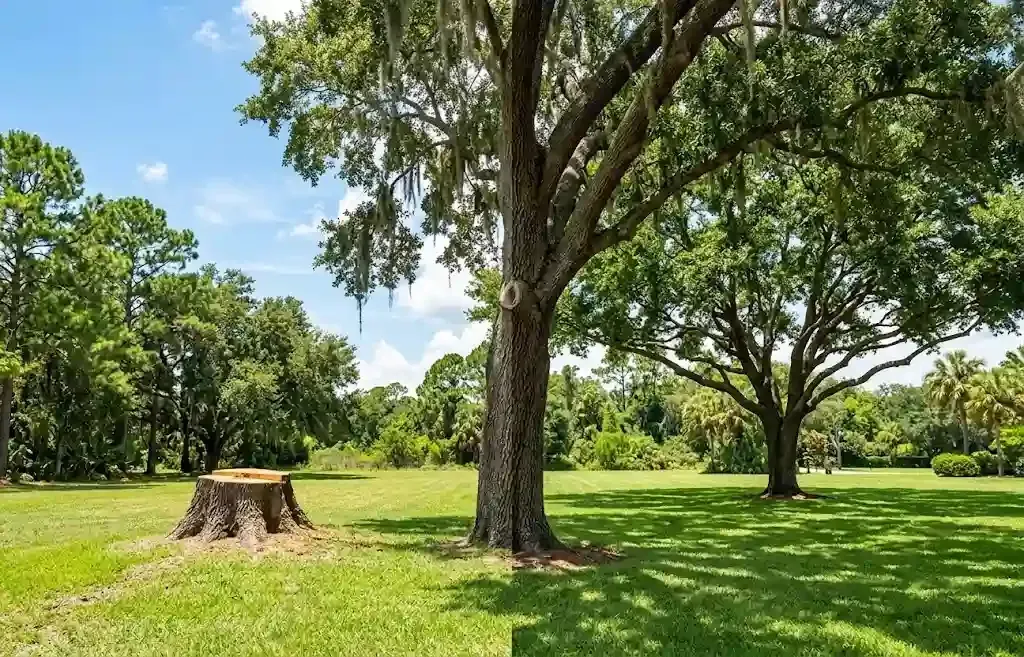
Tree Removal vs. Tree Trimming | Joel’s Pro Tree Service
Tree Removal vs. Tree Trimming in Odessa & Carrollwood, FL: Which Is Better?
Deciding between removal and tree trimming in Odessa or Carrollwood, FL is a massive call for homeowners. Joel’s Pro Tree Service helps property owners address overgrown or damaged timber that requires action. You have to make a choice. A saw crew can drop the entire tree to the dirt. Alternatively, selective pruning can save the canopy. Making the right call depends on trunk health. It depends on structural stability. It also depends on property lines. You need to know if professional cuts can actually fix the underlying hazard.
Trimming keeps the living wood intact. It clears out bad branches while saving your shade. Removal takes the whole thing down. You drop the tree only when keeping it standing becomes a pure safety risk.
Key Takeaways
Preserve healthy oak and pine canopies while selectively dropping heavy, hazardous deadwood before storm season hits.
Eliminate the entire trunk and root system when deep internal rot makes the tree too dangerous to keep standing.
Save mature timber when structural damage is strictly isolated to a few upper canopy branches.
Drop dead, severely leaning, or root-compromised hazards that physically threaten your roofline.
Assess storm damage carefully, because snapped limbs do not always dictate a total takedown.
Hire a seasoned arborist to inspect trunk cavities and root plates when the safest choice remains unclear.
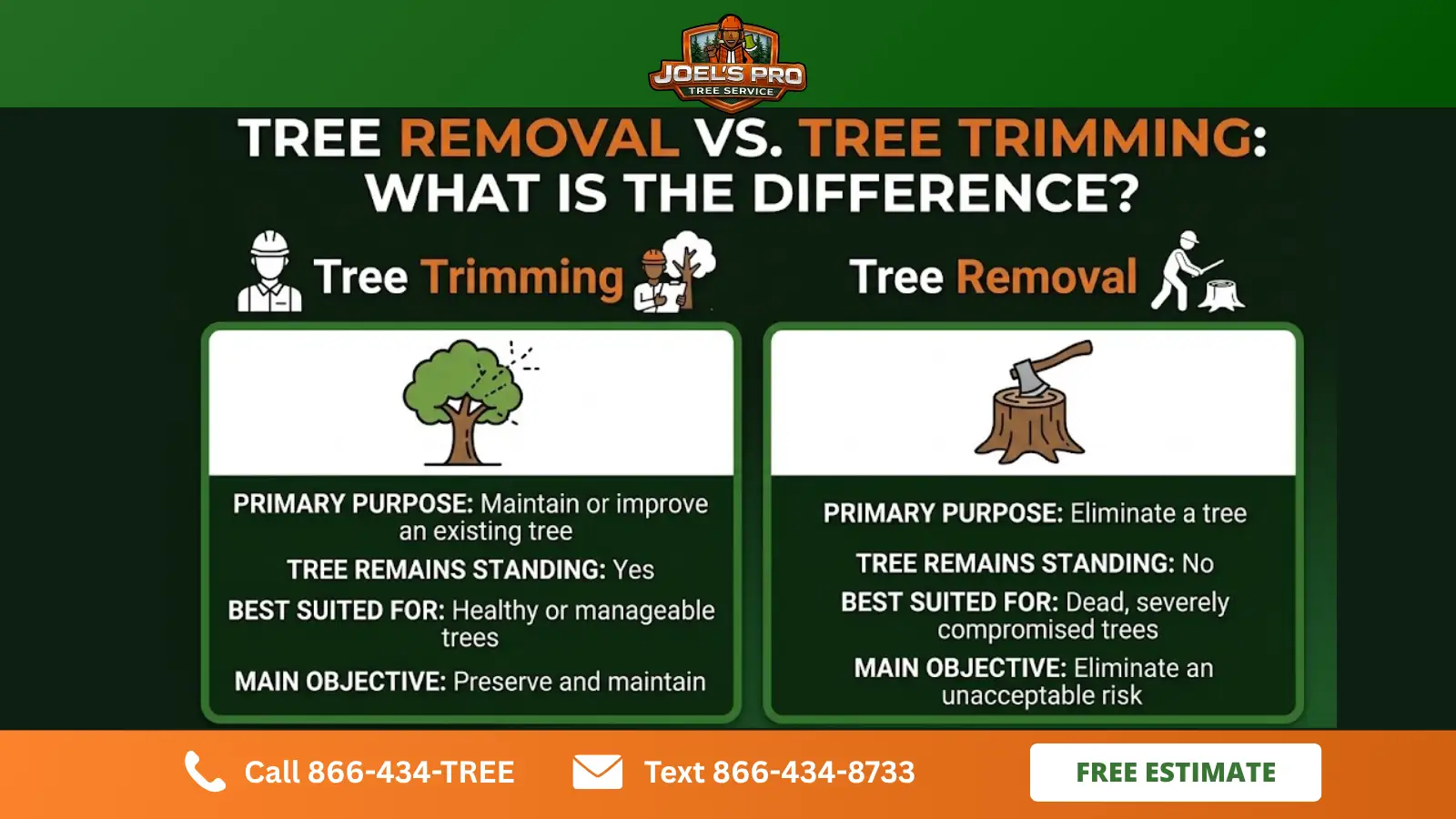
Tree Removal vs. Tree Trimming: What Is the Difference?
Trimming and removal fix entirely different ground problems. Selective cuts preserve the tree. Arborists drop targeted branches to improve clearance and safety. Removal is absolute. The crew takes the whole trunk down to the turf. Your choice depends heavily on one thing. Can this tree survive corrective cuts and stay structurally sound?
Comparison
Tree Trimming | Tree Removal | |
Primary purpose | Maintain or improve an existing tree | Eliminate a tree |
Tree remains standing | Yes | No |
Best suited for | Healthy or manageable trees | Dead, severely compromised, or unsuitable trees |
Addresses overgrown branches | Yes | Yes, by removing the entire tree |
Can remove dead branches | Yes | Not applicable after removal |
Can improve clearance | Yes | Yes |
Corrects severe root failure | No | Removal may be necessary |
Suitable for irreversible structural failure | Usually no | Often |
Typical frequency | Periodic maintenance | One-time service |
Property impact | Usually limited to selected branches | Changes the landscape permanently |
Main objective | Preserve and maintain | Eliminate an unacceptable problem or risk |
The real difference is not just about sawdust on your lawn. The main issue is whether that core trunk can safely hold up a canopy for the next decade.
Schedule Your Tree Service at 866-434-8733
When Tree Trimming Is Usually the Better Choice
Professional cuts make sense under specific field conditions.
Inspect the base and confirm the root plate and main trunk remain solid.
Isolate dead or snapped wood strictly to specific outer branches.
Prune heavy limbs creeping dangerously close to your shingles or driveway.
Thin out thick, overgrown canopies to let heavy Gulf winds pass through safely.
Clean up minor, isolated branch splits after a rough summer thunderstorm.
Train young timber with structural cuts to force strong upward growth.
Keep trees that display healthy sapwood and strong defensive bark.
Proper cuts extend a tree's life. However, you cannot prune away deep trunk rot. Removing a few limbs will never fix a failing root system.
When Tree Removal May Be the Better Choice
Complete takedowns become necessary when preservation fails.
Spot standing deadwood or timber trapped in irreversible decline.
Detect massive cavities that destroy the tree's weight-bearing strength.
Uncover severed or lifting roots that kill the tree's ground anchor.
Identify deep fungal rot that has aggressively eaten through the sapwood.
Recognize property conflicts where no amount of pruning will save a foundation.
Measure severe hurricane damage that leaves behind a shattered central trunk.
Clear out heavy stems blocking new driveway or septic field construction.
Taking down a tree removes it forever. Therefore, base this difficult decision on core structural facts instead of just ugly bark.
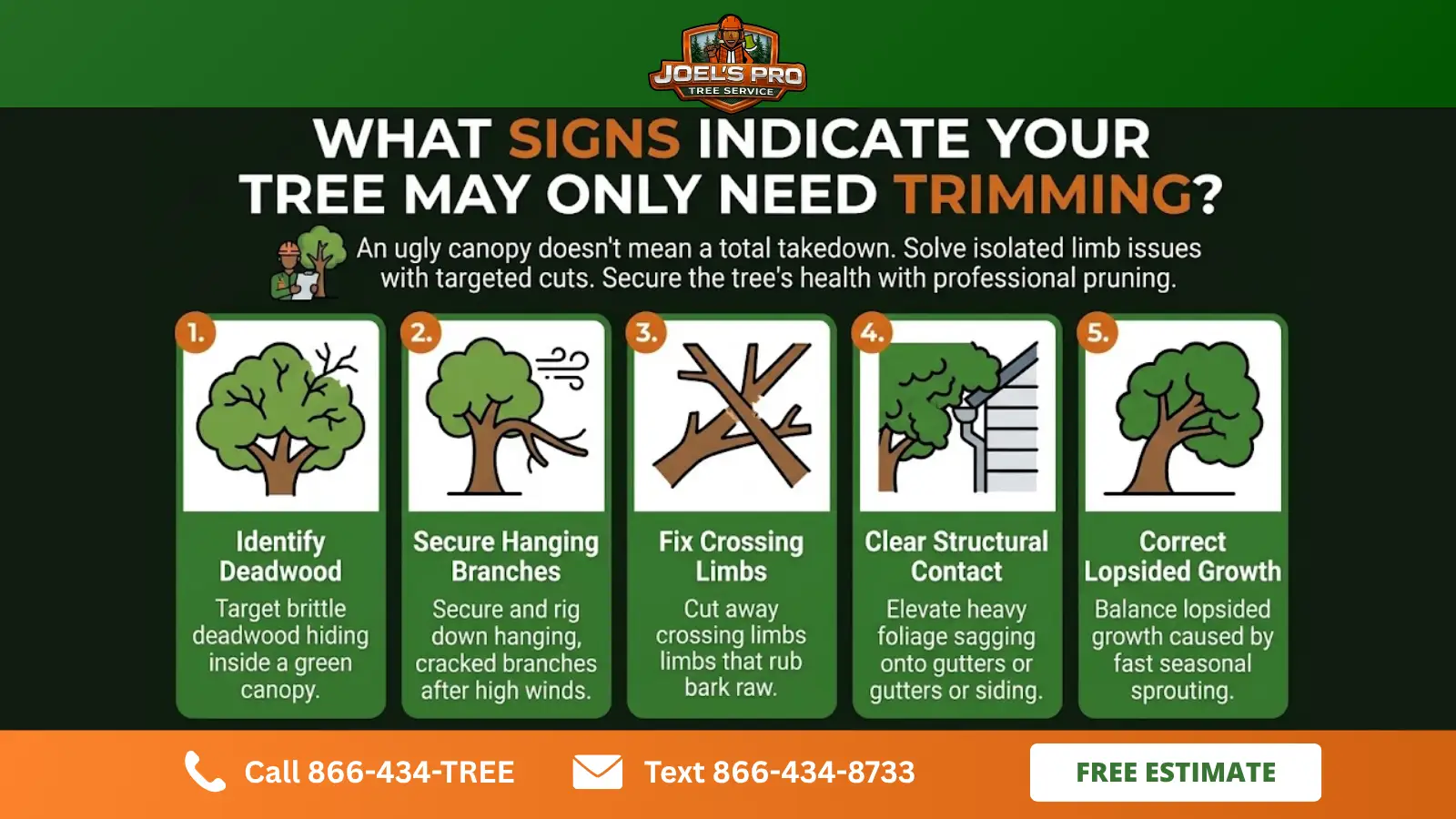
What Signs Indicate Your Tree May Only Need Trimming?
An ugly, overgrown canopy does not automatically mean a total takedown. Many common property hazards stay isolated to a few bad limbs. You can fix these problems with targeted cuts.
Consider professional pruning when you spot these specific issues:
Target brittle deadwood hiding inside an otherwise green canopy.
Secure and rig down hanging, cracked branches after high winds.
Cut away crossing limbs that rub bark raw and invite destructive pests.
Elevate heavy foliage sagging onto your gutters or siding.
Clear low-hanging drops blocking your truck or front walkway.
Balance lopsided growth caused by fast seasonal sprouting.
Thin dense leaf pockets to reduce wind resistance during violent storms.
Prune out minor breakage from isolated wind gusts.
The health of the main trunk matters most. If the bark and root collar are solid, selective cuts solve the threat. You won't have to sacrifice the whole tree.
Good pruning needs a clear goal. Hacking off branches randomly wrecks tree structure. Never let a crew top your trees as a quick fix.
Some hazards look worse than they actually are. An arborist assessment proves whether dropping a few limbs handles the risk. Sometimes, you uncover a much deeper structural failure during the inspection.
Schedule Your Tree Service at 866-434-8733
When Is Tree Removal Better Than Trimming?
Takedowns take priority when pruning cannot cure the root cause. Dropping a few branches from a rotting trunk just ignores the real collapse hazard.
Serious conditions demand professional evaluation on the ground:
Assess a dead or dying canopy. Pruning cannot bring back dead wood, and the deterioration only spreads.
Probe major trunk decay. Deep hollows destroy the main stem's ability to hold heavy lateral weight.
Examine severe root damage. Roots act as structural anchors. Snapped roots mean the tree will eventually fall.
Monitor a sudden, fresh lean. High winds push wet soil. A new tilt often means underground structural failure.
Inspect a split central trunk. Massive vertical cracks create hazards that pruning saws cannot physically fix.
Evaluate widespread decline. When the crown and main trunk both fail, preservation stops making sense.
Check unmanageable property conflicts. Some trees simply outgrow tight spaces against house foundations.
No single symptom forces a removal. You must weigh the species, weight distribution, and the targets underneath the canopy.
If corrective cuts leave a safe tree, pruning wins. When structural failure goes too deep, you must bring in the heavy equipment for a full drop.
Can a Storm-Damaged Tree Be Trimmed Instead of Removed?
Yes. Storm damage does not guarantee a total clearing job. Florida summer storms snap branches constantly. They do not always shatter the main trunk. Corrective pruning works if the root anchor holds strong.
After a major blow, inspect your yard for these signs:
Identify broken or hanging widow-maker limbs trapped high up in the canopy.
Check major branch unions for fresh, white splintering.
Watch for any sudden, unnatural tilt pointing toward your home.
Examine the turf for heaved soil or exposed, torn roots.
Probe the main bark for deep, vertical stress cracks.
Calculate how much green canopy actually blew away in the wind.
Locate heavy limbs resting hard on your roof or fence line.
A tree missing a few small limbs usually bounces back with good pruning. Conversely, a shattered trunk or lifted root plate requires immediate removal.
Location dictates the urgency. A damaged oak over your driveway presents a massive risk. That same damaged oak out in a back pasture buys you more time.
Never stand under widow-makers. Do not try cutting tension-loaded branches yourself. Bent wood holds massive kinetic energy. One wrong chainsaw cut causes severe injury.
Bring in a pro. They tell you exactly if rigging down limbs saves the tree. Sometimes, dropping the whole thing is the only safe play.
How Does Professional Tree Trimming Help Preserve Healthy Trees?
Proper pruning is not just hacking away green leaves. It requires precise, strategic cuts. The goal is saving as much structural wood as possible.
Executed properly, expert tree trimming in Odessa and Carrollwood, FL delivers major structural benefits:
Remove cracked, dead, or pest-infested timber cleanly.
Improve physical clearance around brick walls and power lines.
Correct poor branch angles while the tree is still young and manageable.
Eliminate crossing limbs that grind together in the wind.
Space out heavy lateral branches to balance overall canopy weight.
Reduce specific overhead drop hazards above foot traffic.
Maintain a solid, wind-resistant shape for the local climate.
Timing and blade angles matter heavily. Every saw cut leaves an open wound. Bad cuts stress the tree and invite rot.
You cannot prune a tree forever if it sits in the wrong spot. Constant heavy trimming weakens the structure over time. If a mature tree keeps hitting your siding, removal ultimately becomes the smartest financial move.
The true objective is expert tree care. The goal is never just stripping off maximum foliage.
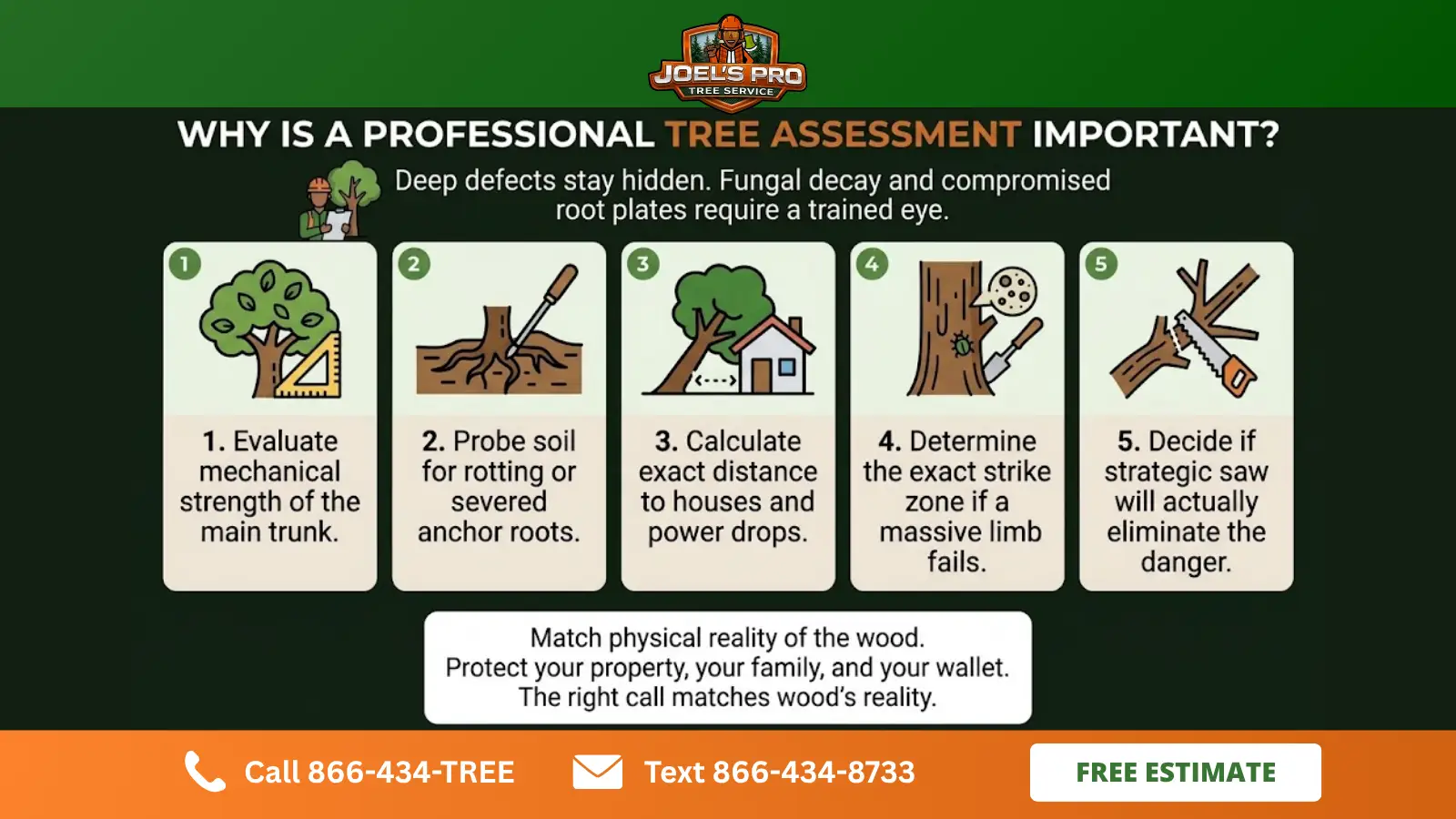
Why Is a Professional Tree Assessment Important Before Choosing Removal or Trimming?
Anyone can spot a snapped branch from the sidewalk. Deep structural defects stay hidden. Fungal decay and compromised root plates require a trained eye.
A real arborist inspection covers the hard facts:
Gauge overall sap flow and canopy health.
Evaluate the mechanical strength of the main trunk.
Probe the soil for rotting or severed anchor roots.
Measure the volume of standing deadwood.
Assess hidden torsional fractures from recent storms.
Monitor soil heaving around the base of leaning trunks.
Calculate the exact distance to houses and power drops.
Determine the exact strike zone if a massive limb fails.
Decide if strategic saw cuts will actually eliminate the danger.
This inspection makes or breaks your property decision. The cheapest fix is not always the safest. A total takedown isn't always required for a few broken sticks.
The right call matches the physical reality of the wood. It protects your property, your family, and your wallet.
Schedule Your Tree Service at 866-434-8733
Choose the Right Tree Removal or Tree Trimming Service in Odessa & Carrollwood, FL
Choosing between a saw and pruning shears comes down to hard facts. Look at root stability. Look at trunk health. Look at where the timber will fall. Healthy canopies with minor branch issues just need a good pruning. Dead, rotting, or shattered trunks require heavy removal equipment.
Joel's Pro Tree Service brings heavy-duty experience right to your yard in Odessa, Carrollwood, and the surrounding Tampa Bay area. Our crews handle surgical pruning. We run complete takedowns. We grind stumps and manage emergency storm drops across the local area.
Stop guessing what your heavy timber needs. Get boots on the ground. Find out exactly which approach secures your property.
Contact Joel's Pro Tree Service at 866-434-TREE for a free, no-nonsense estimate. Book your tree trimming in Odessa or Carrollwood, FL today to keep your property safe, clear, and structurally sound.
Frequently Asked Questions
Q: Is tree trimming cheaper than tree removal?
A: Pruning usually costs less than a full takedown. However, exact pricing depends on height, access, and hazard levels. Dropping limbs safely over a glass sunroom takes time. Request a hard estimate based on your exact yard.
Q: Can trimming prevent a tree from needing removal later?
A: Smart pruning fixes weight issues early. It catches damage before rot sets in. It definitely extends a tree's lifespan. Still, no amount of pruning stops deep root failure or massive trunk disease. Eventually, severely compromised trees have to go.
Q: How often should trees be professionally trimmed?
A: There is no universal timeline. Fast-growing species need more frequent cuts. Older, established timber needs less. Regular ground inspections catch deadwood early. Call a professional when branches cross or start sagging heavily.
Q: Should a leaning tree be trimmed or removed?
A: A lean does not automatically equal a death sentence. Natural leans happen gradually over decades. Sudden leans happen overnight after a bad storm. If the soil heaves and roots tear, have it inspected before it crushes your roof.
Q: Can you trim a tree that is close to a house?
A: Crews routinely drop branches safely away from shingles and gutters. Targeted cuts provide necessary clearance. Be careful, because hacking off half the canopy destroys the tree. If the trunk sits two feet from your foundation, removal makes more sense.
