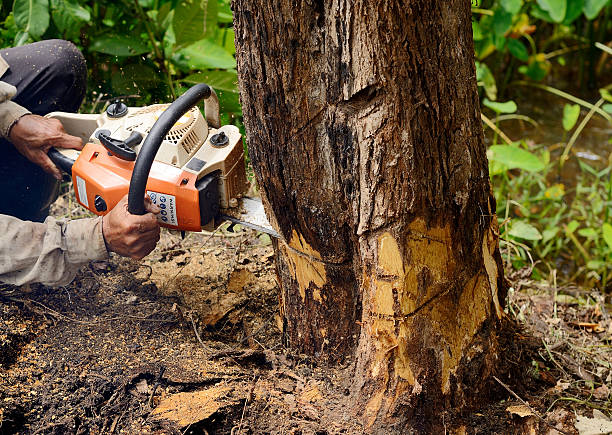
When Is Tree Removal Necessary in Odessa & Carrollwood, FL?
When Is Tree Removal Necessary in Odessa & Carrollwood, FL?
Property owners often ask exactly "when is tree removal necessary?" before a major Gulf storm hits the coast. For help answering that question, Joel’s Pro Tree Service serves property owners throughout the area. The reality is simple. A tree either threatens your roof, holds deep rot, or sits ready to snap. Florida's coastal winds and saturated summer downpours beat up local timber across Odessa, Carrollwood, and the greater Tampa Bay area. Pests chew through healthy wood. Sometimes, the damage stays hidden.
Catching structural failure early saves your home from catastrophic crush damage. It keeps your yard safe. You also stop yourself from dropping a perfectly sound oak that just needs a light crown cleanout.
Key Takeaways
Clear dead wood and severe storm splits before heavy winds cause structural failure.
Inspect leaning trunks, root plate lifting, and hollow cavities to catch drop risks.
Evaluate proximity to rooflines, septic drain fields, and concrete foundations.
Prune diseased branches early if the heartwood remains solid enough for support.
Schedule an on-site hazard assessment with a certified crew to plan safe drop rigging.
When Should a Tree Be Removed From Your Property in Odessa or Carrollwood?
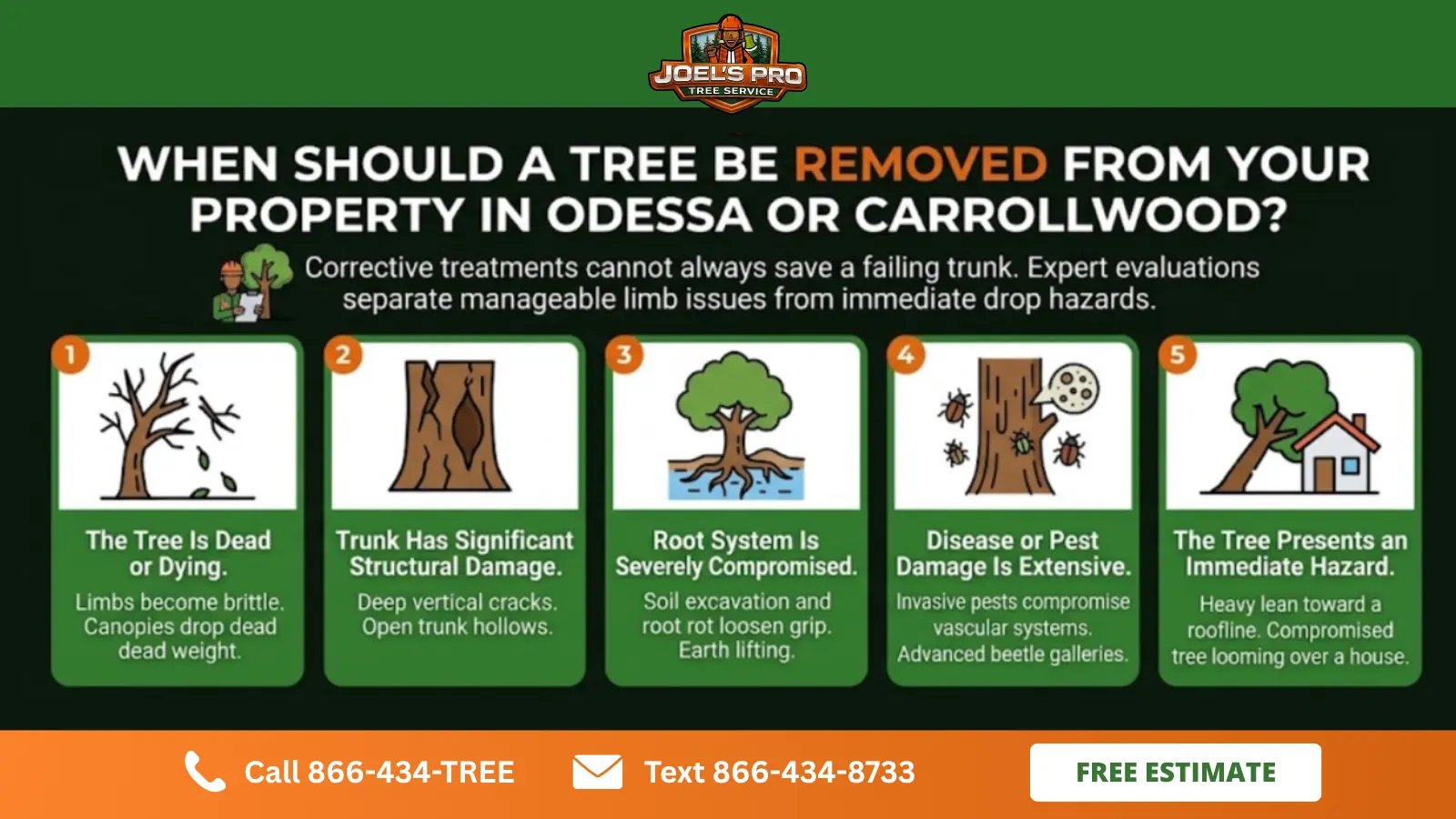
Timber belongs on the ground if its structural integrity blows out completely. Corrective treatments cannot always save a failing trunk. You cannot judge a tree just by a few green leaves on top. You must evaluate the root flare, bark seams, branch unions, and surrounding structures. Homeowners must watch for sudden shifts after a week of tropical rain.
Common situations that can make removal necessary include:
1. The Tree Is Dead or Dying Standing dead wood loses moisture fast. Limbs become brittle and highly unpredictable. Rotted wood fiber causes the canopy to drop dead weight. This creates a hazard for anything underneath. Dying timber shows heavy canopy dieback, peeling bark, and bare scaffold limbs.
2. The Trunk Has Significant Structural Damage Deep vertical cracks ruin a tree's load-bearing strength. Open trunk hollows and severe crotch splits are massive red flags. Decay eats away the heartwood near the base. High wind leverage can then snap the main stem without warning. Dropping the tree is often the safest long-term fix.
3. The Root System Is Severely Compromised Roots act as thick anchor cables against Florida wind and rain. Soil excavation and root rot fungi loosen that critical grip. Standing water heavily reduces ground stability. Earth lifting around the root flare signals a massive problem. A sudden change in trunk angle indicates critical anchoring failure.
4. Disease or Pest Damage Is Extensive Invasive pests compromise internal vascular systems fast. Some early problems respond to deep treatments. However, advanced beetle galleries or fungal rot destroy major structural limbs. Leaving it standing risks spreading pests to nearby healthy trees.
5. The Tree Presents an Immediate Hazard A heavy lean toward a roofline demands quick intervention. Damaged canopies hanging over a high-traffic driveway are dangerous. A compromised tree looming directly over a house is a bad gamble. Sometimes, parts of the canopy remain green while the base fails.
A single defect does not mean the tree must come down today. Joel's Pro Tree Service helps Odessa and Carrollwood property owners sort this out. Expert evaluations separate manageable limb issues from immediate drop hazards.
Schedule Your Tree Service at 866-434-8733
What Warning Signs Suggest a Tree May Become Dangerous?
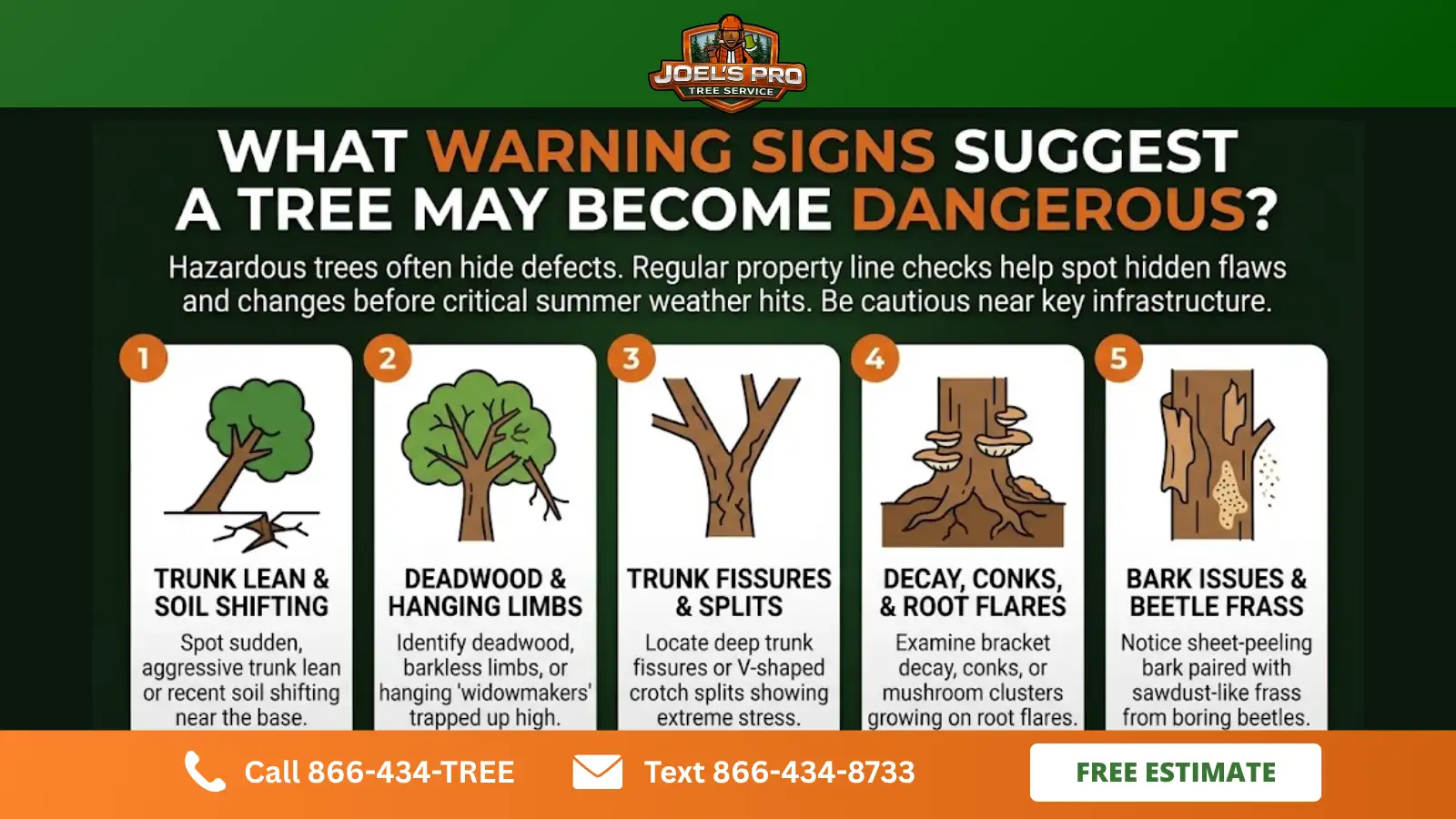
Hazardous trees love to hide their flaws. A Laurel Oak might look lush on the outside. Meanwhile, white rot hollows out its core until the trunk becomes a fragile pipe. Walking your property line regularly catches these hidden defects. Pay close attention near fences, driveways, pools, and power lines. Spotting changes before a summer blow hits is crucial.
Warning signs worth investigating include:
Spot sudden, aggressive trunk lean or recent soil shifting near the base.
Identify deadwood, barkless limbs, or hanging "widowmakers" trapped up high.
Locate deep trunk fissures or V-shaped crotch splits showing extreme stress.
Check for open cavities, soft wood decay, or hollow spots along the lower stem.
Examine bracket decay, conks, or mushroom clusters growing on root flares.
Uncover severed, crushed, or rotting surface roots exposed by erosion.
Monitor rapid canopy dieback or bare branch tips during peak growing season.
Notice sheet-peeling bark paired with sawdust-like frass from boring beetles.
Detect ground cracking or exposed root mats lifting on the lee side of a lean.
Assess massive structural branch loss immediately following a line squall.
Determining real hazard levels requires more than a glance. Tree height, weight distribution, and proximity to buildings all matter. Recent weather events also dictate whether a tree stays or goes. Getting an expert eye on-site beats waiting for a severe storm to decide for you.
Schedule Your Tree Service at 866-434-8733
How Does Storm Damage Affect the Decision to Remove a Tree?
Florida storms act like violent stress tests for local timber. High winds twist canopies and wrench root plates. Heavy rains rip large limbs straight out of their sockets. This exposes hidden decay that was completely invisible yesterday. Some trees lose minor branches and recover perfectly. Others suffer catastrophic trunk failure and require full teardown.
After severe weather sweeps through, homeowners should look for:
Monitor trunks that suddenly begin leaning due to saturated soil.
Find main stem splits or severe bark separation along major branch crotches.
Track hanging, broken limbs trapped high up in the canopy under tension.
Assess exposed root plates pulled straight out of wet ground.
Calculate crown destruction where half of the main branching structure snapped off.
Spot heavy limbs resting directly on roof ridges or utility lines.
Measure fresh, expanding stress cracks running down the main trunk stem.
Never try to cut hanging limbs yourself. Bent trunks and trapped branches hold massive pressure. One wrong cut can cause lethal chainsaw kickback. Damaged timber shifts fast.
Calling in a certified crew ensures every variable is safely managed. Figuring out when tree removal is necessary after severe weather comes down to controlled rigging. Protecting nearby structures remains the absolute priority. Trees with light, recoverable damage can instead get corrective pruning.
Can a Diseased or Damaged Tree Be Saved Instead of Removed?
Yes, preservation is often highly possible. Rough-looking branches or bug infestations do not guarantee a clear-cut. Many trees bounce back with corrective pruning or targeted pest management. The real key is catching the problem before structural heartwood fails.
Several practical factors help determine whether preservation makes sense:
Measure damage severity to see if main scaffold limbs remain solid.
Gauge overall vigor, leaf color, and active vascular flow across the crown.
Verify structural stability so the tree stays anchored while recovering.
Diagnose disease severity early before systemic rot destroys main trunks.
Map target locations to ensure a recovering tree avoids threatening homes below.
Calculate long-term survival probability to avoid wasting money on doomed timber.
Preservation is always the goal if the wood stays structurally sound. Choosing the right treatment beats defaulting to the chainsaw. Joel's Pro Tree Service evaluates these specific conditions. Crews help property owners in Odessa, Carrollwood, and neighboring communities understand if pruning, monitoring, or full drop rigging fits best.
Why Should Hazardous Trees Be Addressed Before They Cause Property Damage?
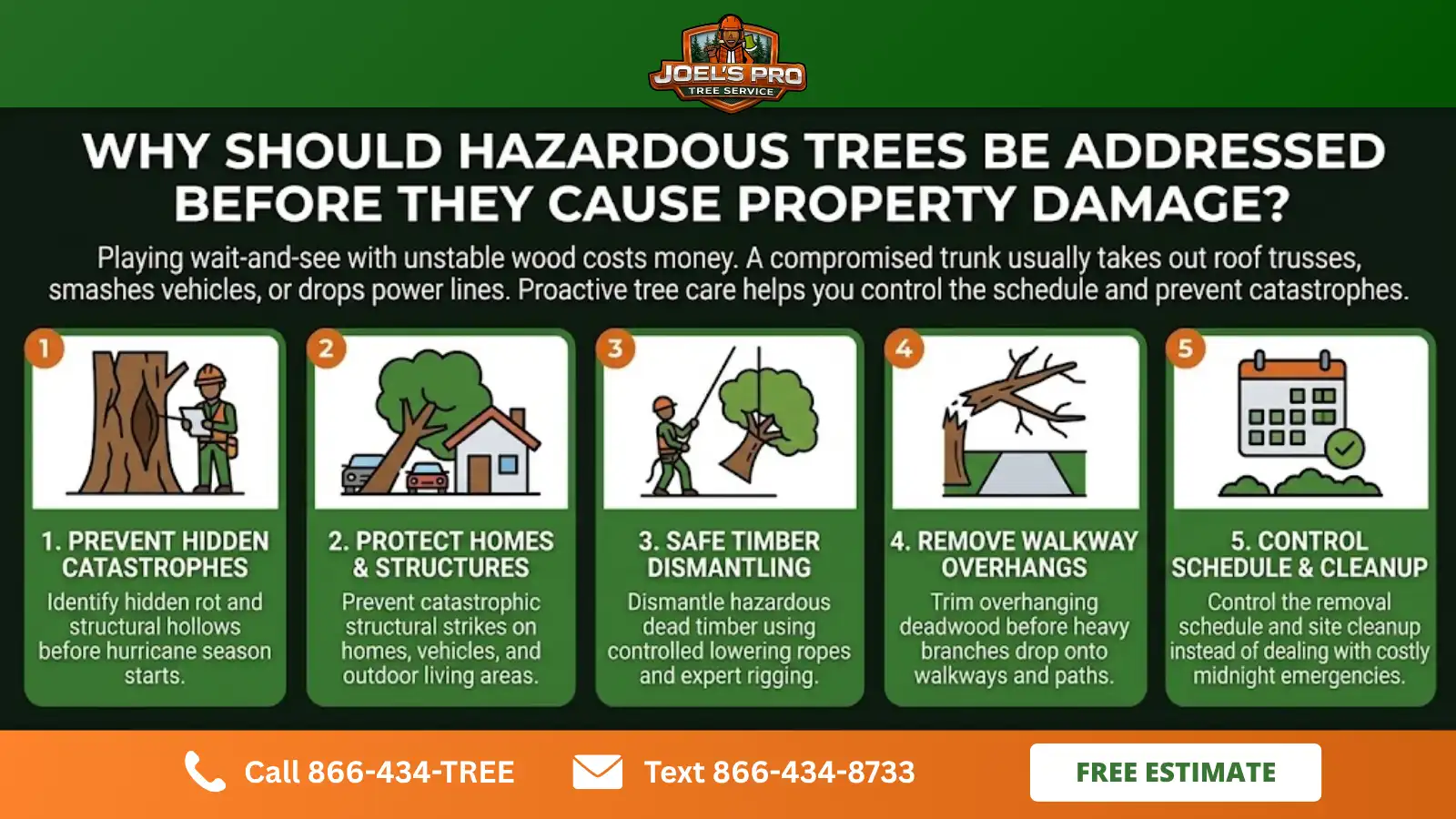
Playing wait-and-see with unstable wood costs money. A compromised trunk rarely lands softly in an open lawn. It usually takes out roof trusses, smashes vehicles, or drops power lines. Waiting turns a standard pruning job into an emergency crane rescue.
Proactive tree care helps Odessa and Carrollwood property owners:
Identify hidden rot and structural hollows before hurricane season starts.
Prevent catastrophic structural strikes on homes and outdoor living areas.
Dismantle hazardous dead timber using controlled lowering ropes.
Trim overhanging deadwood before heavy branches drop onto walkways.
Control the schedule and site cleanup instead of dealing with midnight emergencies.
Protect turf and septic lines by staging drop zones carefully.
Schedule Your Tree Service at 866-434-8733
Planned removals give tree crews time to set up properly. Techs evaluate crane access, rig lowering lines, and lay ground mats. That control disappears when a massive oak collapses on your garage during a thunderstorm.
Being proactive does not mean cutting down every mature tree. It means identifying genuine hazards early. Property owners must choose safe solutions based on real conditions.
Professional Tree Removal and Hazardous Tree Services in Odessa & Carrollwood, FL
Spotting structural hazards early keeps your family completely safe. Dead wood, trunk rot, severe leaning, and cracked scaffolds need professional evaluation. Acting fast prevents thousands of dollars in property damage. Prompt attention matters most when heavy limbs hang over high-traffic areas.
Our team assesses the tree directly on your lot in Odessa, Carrollwood, and the surrounding Tampa Bay area. Techs explain the available options clearly. We figure out exactly what corrective action fits your specific property. Calling 866-434-TREE gets you a free, no-obligation estimate today.
Contact Joel's Pro Tree Service to schedule an assessment right away. Handle dangerous timber safely and efficiently. Never guess when tree removal is necessary until a professional evaluates the risk.
Frequently Asked Questions
Q: How much does tree removal typically cost in Odessa or Carrollwood, FL?
A: Pricing hinges on tree height, trunk diameter, and overall wood condition. Yard access and proximity to structures also drive the final bill. An open-yard drop costs significantly less than a tight-quarter removal requiring cranes. Site evaluations give you an exact, accurate price for your specific setup.
Q: What time of year is best for removing a tree in Florida?
A: Tree work happens year-round in this climate. Winter and dry spring months offer ideal ground conditions for heavy machinery. However, hazardous timber needs immediate attention. Do not wait for a specific month if a tree shows severe lean or structural rot.
Q: Does homeowners insurance pay for removing a fallen tree?
A: Insurance policies generally kick in only if the timber strikes a covered structure. If a dead tree falls onto your grass without hitting anything, insurance rarely pays. Removing covered property damage is handled differently. Checking your specific policy terms is always a smart move.
Q: What happens to the stump after a tree is removed?
A: Standard removal cuts the tree down close to ground level. The stump stays intact unless you add stump grinding to the bid. Grinding uses a high-powered wheel to chew the root ball down below grade. This reclaims usable yard space for fresh sod or new garden beds.
Q: How should I prepare my property for professional tree removal?
A: Clear the work area completely before the crew arrives. Move vehicles, patio furniture, potted plants, and lawn gear away from the drop zone. Make sure heavy equipment has clear gate access. Keep pets and kids indoors while saws run.
